
The Real Product Wasn’t the Product
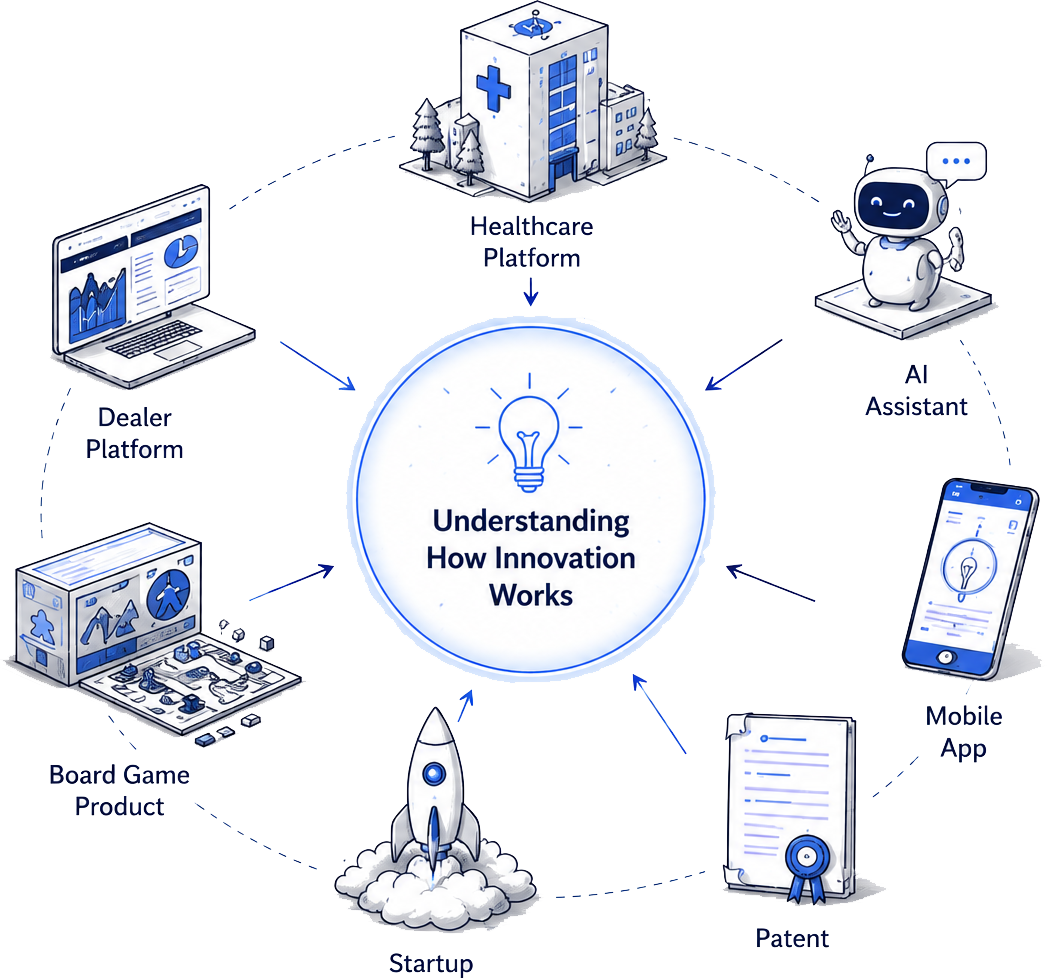
Healthcare platforms. Automotive experiences. AI initiatives. Patented inventions. Mobile apps. Kickstarter campaigns. On the surface, they all seem very different. But over time I realized the most valuable thing I was building wasn’t the product itself. It was a deeper understanding of how innovation actually works. How ideas gain support. How teams navigate change. How organizations adopt new ways of working. How promising concepts survive contact with reality. And how the right combination of people, process, technology, and leadership can transform possibilities into progress.
Those lessons emerged across every chapter of my career and ultimately evolved into the framework that follows.
Operationalizing Innovation
Most organizations already have more ideas than they know what to do with. Employees see opportunities. Customers share feedback. Teams identify inefficiencies. New technologies create possibilities. In many cases, the ideas themselves are not the limiting factor.
The real challenge is creating an environment where those ideas can surface, gain support, survive competing priorities, and ultimately become something real—something people use, something that creates value, and something that lasts.
Over time, I began thinking less about innovation as a moment of inspiration and more as a system that can be intentionally designed, supported, and scaled.
That’s what I mean when I talk about operationalizing innovation.
The Innovation Myth
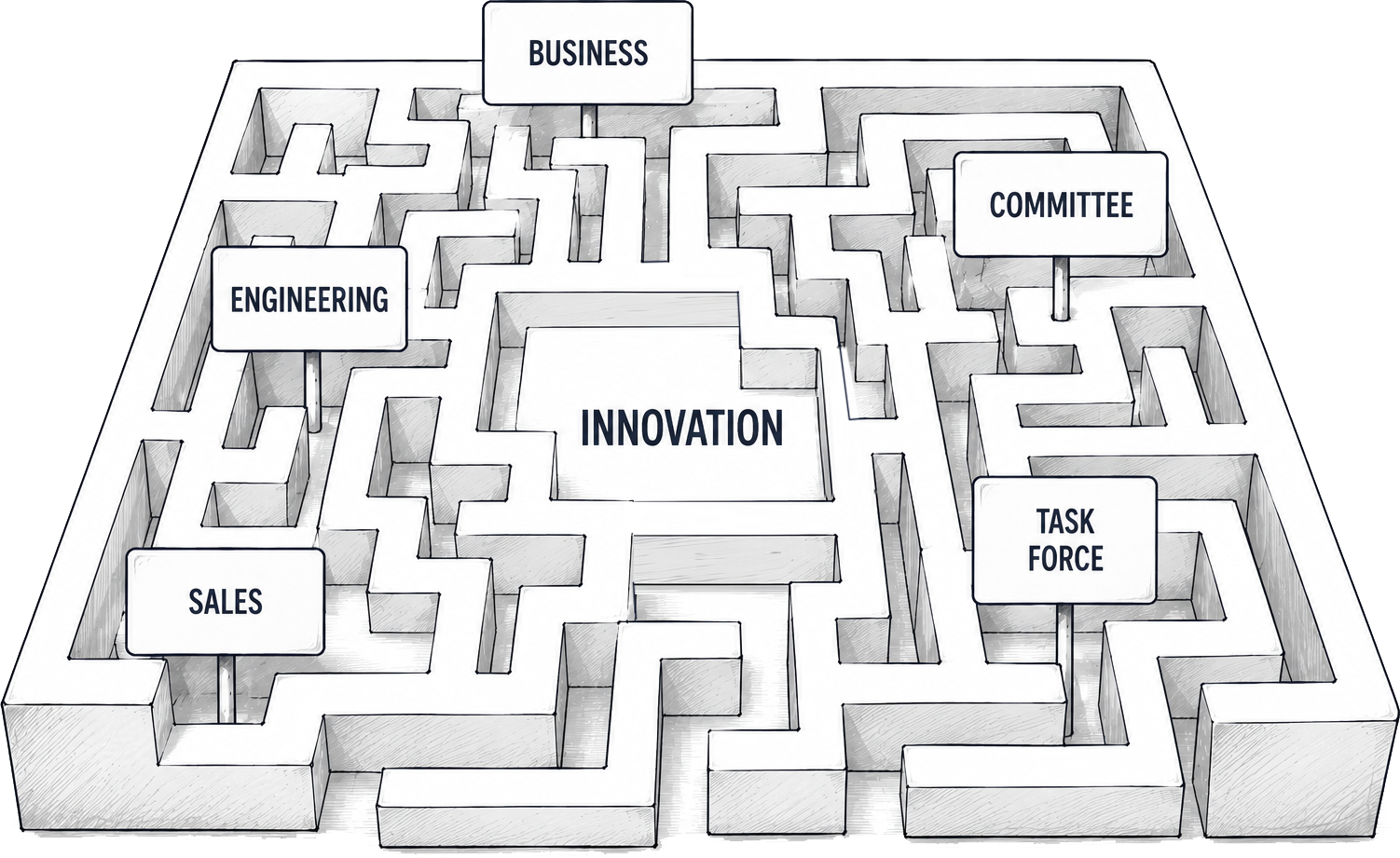
Organizations often talk about innovation as though it’s something that can be purchased, assigned, or delegated. Create an innovation team. Launch an innovation lab. Adopt a new technology. Hire a few smart people.
While those things can certainly help, they rarely solve the underlying challenge.
In my experience, innovation is not a department, a title, or a workshop. It’s an outcome—the result of people, processes, technology, culture, and leadership working together in a way that allows good ideas to move forward.
When one of those elements is missing, even promising ideas can struggle to gain traction. I’ve seen great concepts fail because teams weren’t aligned, stakeholders couldn’t agree, priorities shifted, or nobody had ownership. I’ve also seen relatively simple ideas create enormous value because the right conditions existed to help them succeed.
The difference is rarely the idea itself.
Where Innovation Really Comes From
One of the biggest misconceptions about innovation is that it originates from a handful of visionary individuals. While breakthrough ideas certainly exist, most meaningful innovation I’ve encountered came from people who were already close to the problem.
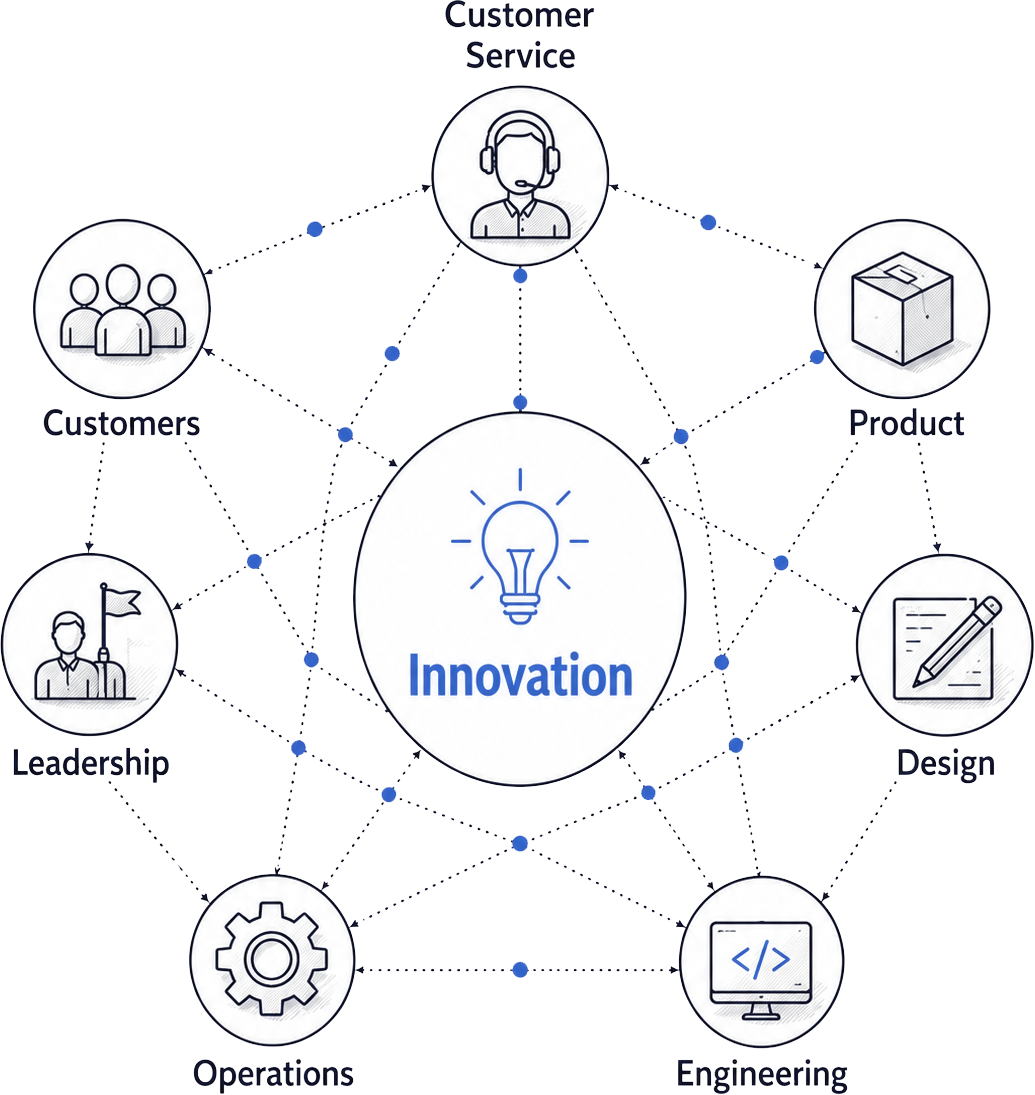
Customer service representatives who spotted recurring pain points. Engineers who saw opportunities to simplify complexity. Designers who uncovered unmet needs. Product managers who connected seemingly unrelated ideas. Frontline employees who understood operational realities better than anyone else.
The challenge isn’t generating ideas. It’s creating an environment where those ideas can be heard, refined, supported, and implemented.
Innovation is often less about invention and more about enablement. It’s everywhere and my job is connect the dots.
The Four Ingredients
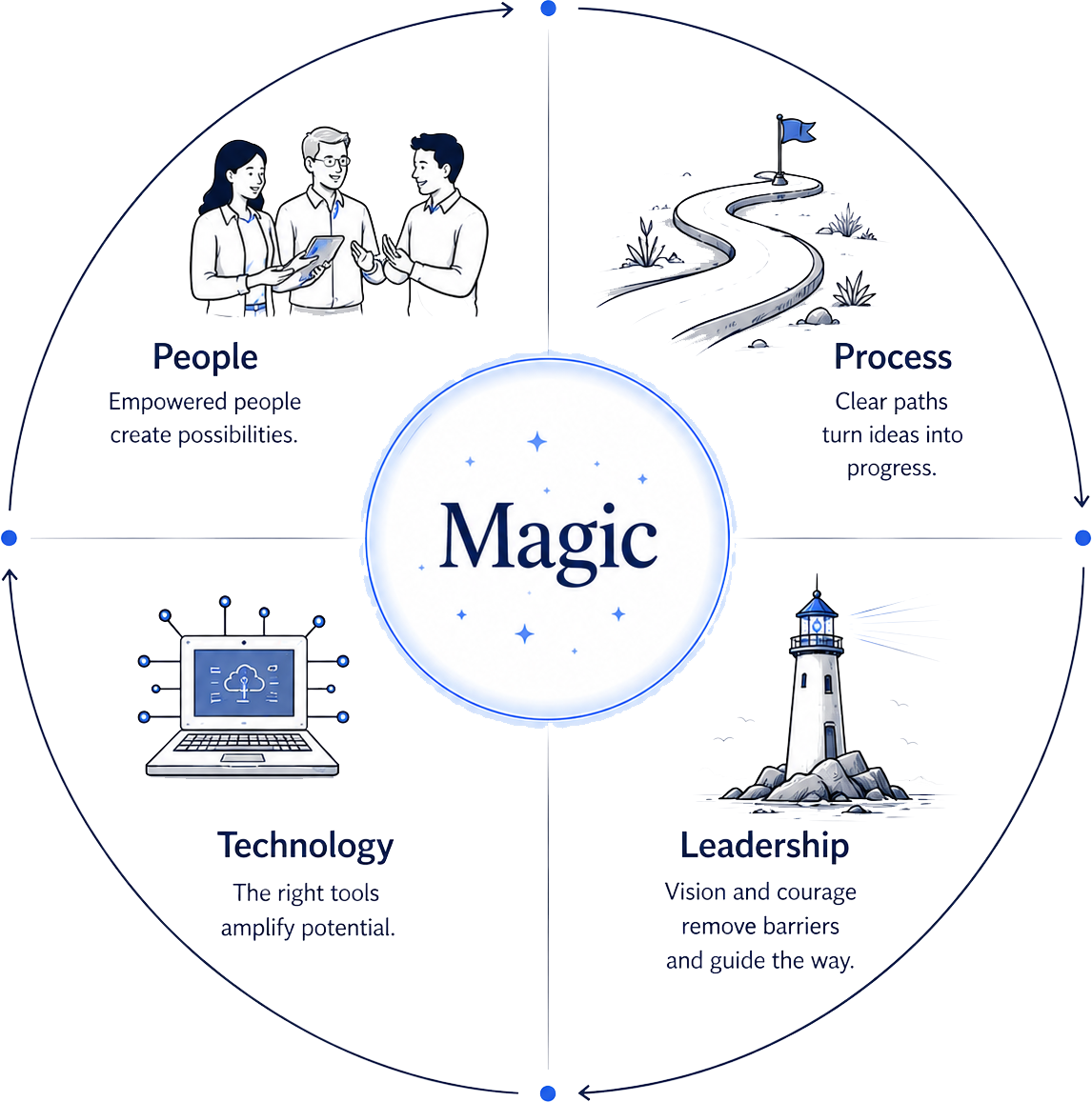
Over the years, I’ve noticed that successful innovation initiatives almost always rely on four interconnected elements: people, process, technology, and leadership.
People
Everything starts with people. People identify opportunities. People challenge assumptions. People build momentum. People ultimately determine whether change succeeds or fails. Organizations that invest in trust, collaboration, psychological safety, and empowerment tend to generate more innovation than those that rely solely on structure or technology.
Process
Great ideas need enough structure to move forward, but not so much structure that they become trapped in bureaucracy. The goal isn’t process for the sake of process. It’s creating a framework that allows experimentation, learning, prioritization, and execution to coexist. Too little structure creates chaos. Too much structure prevents progress. The balance matters.
Technology
Technology is one of the most powerful accelerators available to organizations, but it’s often misunderstood. Technology doesn’t create innovation by itself. It amplifies existing capabilities. Artificial intelligence is a perfect example. AI can dramatically increase productivity, accelerate research, surface insights, and automate routine tasks. But without clear goals, thoughtful implementation, and human judgment, it rarely delivers meaningful outcomes on its own. Technology is an enabler, not a strategy.
Leadership
Leadership is often the deciding factor. Leaders influence priorities, allocate resources, shape culture, remove barriers, and determine which ideas receive support. I’ve seen innovation thrive in environments where leaders encouraged experimentation, accepted thoughtful risk, and empowered teams to challenge conventional thinking. I’ve also seen innovation stall when fear, bureaucracy, or indecision became the dominant forces. Leadership doesn’t create every idea, but it often determines which ideas survive.
Making Magic Happen
People often speculate where innovation comes from. My answer has evolved over the years.
I no longer believe innovation is primarily about breakthrough ideas or flashes of inspiration. More often, it’s about creating the conditions where ideas can thrive. It’s connecting people with opportunities. Connecting insights with action. Connecting technology with real-world problems. Connecting vision with execution.
The most successful organizations I’ve worked with aren’t the ones with the smartest people or the biggest budgets. They’re the ones that create environments where ideas can emerge, gain momentum, and become reality.
That’s the magic.
And making that happen is what I do best.
Final thoughts.
Looking back on all the stuff I’ve worked on- they looked very different on the outside, but they all reinforced the same lesson: great ideas rarely succeed on their own. They need people who believe in them. Teams willing to build them. Leaders willing to support them. And environments where they can gain momentum and thrive.
That’s the work I’ve been fortunate enough to do throughout my career. And it’s the work I’m excited to continue doing.